All posts by Gokhan Yurdakul

Transfer Pricing Adjustments, Debit Notes and Their Impact on Customs Value in Türkiye
Mar 31, 2026

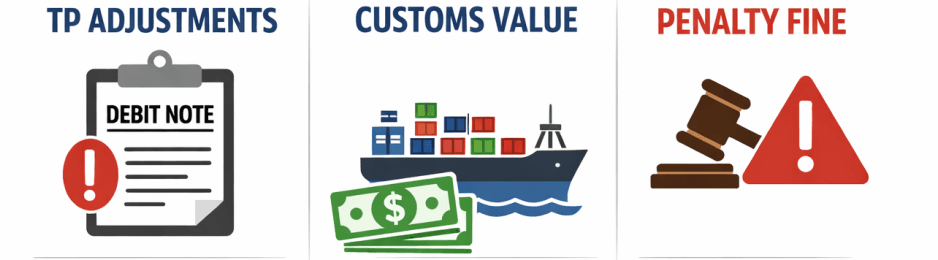
<p>Transfer pricing (TP) adjustments, retroactive price revisions, and debit note flows between related parties represent one of the most critical and frequently challenged areas in Turkish customs practice. While these adjustments are primarily driven by corporate tax compliance requirements, their direct and often underestimated impact on customs valuation creates a structural compliance risk for importers operating in Türkiye. In practice, many companies manage transfer pricing correctly from a tax perspective but fail to reflect these adjustments in customs declarations, resulting in a disconnect between financial records and customs value.</p><p>This gap is no longer tolerated in the current enforcement environment. Customs authorities have significantly increased their focus on post-clearance audits, particularly in areas where accounting data can be cross-checked against customs declarations. Transfer pricing adjustments, by their nature, leave a clear financial trace. As a result, what may appear to be a routine accounting correction can quickly evolve into a customs valuation issue with retroactive duty exposure, VAT reassessment, and substantial administrative penalties.</p>

TAREKS in Türkiye: From No-Scope Declaration to Technical Inspection
Jan 28, 2026

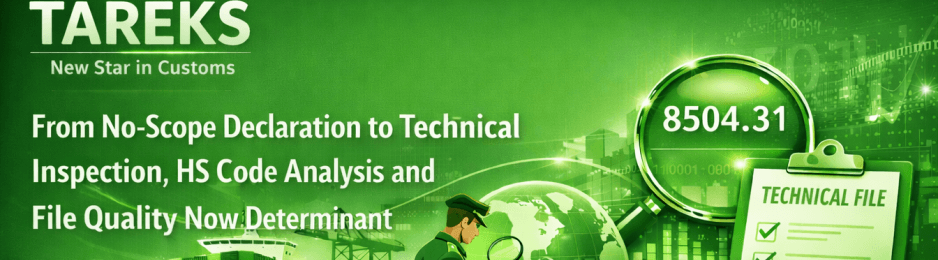
<p>As of 2026, the changes introduced in <strong>Türkiye’s TAREKS (Risk-Based Foreign Trade Control System)</strong> do not merely constitute a procedural update; they represent a structural transformation that fundamentally reshapes the approach to import controls under <strong>Turkish customs and product safety legislation</strong>. In particular, the effective abandonment of the traditional concept of “no-scope declaration” has created a new inspection reality for companies importing goods into Türkiye.</p><p>Under the new Turkish practice, declaring that a product is outside the scope of a specific product safety regulation is no longer an exception that accelerates customs clearance. Instead, such a declaration now serves as the <strong>starting point of technical and regulatory inspection</strong> carried out through TAREKS.</p><p>Within this framework, TAREKS has evolved from a system that merely filters products subject to control into a <strong>central inspection mechanism</strong> under Turkish law, requiring even allegedly out-of-scope products to be assessed from <strong>technical, legal, and functional perspectives</strong>. The most visible consequence of this transformation is the significantly increased importance of <strong>HS Code (GTİP) analysis</strong> and <strong>technical file quality</strong> in imports to Türkiye.</p>

Customs Valuation of Assists, Engineering and Development Costs
Dec 31, 2025

One of the most technically demanding and dispute-prone areas in customs valuation concerns buyer-supplied goods and services, including engineering, development, design and technical services, as regulated under Article 27(1)(b) of the Turkish Customs Law. These elements, commonly referred to as assists, rarely remain a simple valuation adjustment in practice. Particularly in transactions between related parties, assists often evolve into a complex and multi-layered compliance risk.

Globalization and Consultancy: Next-Gen Customs Consultancy
Nov 18, 2025

Geopolitical disruptions, the reconfiguration of supply chains, and the rise of e-commerce have transformed customs processes from a task of simply filling out declarations into a strategic domain where corporate risk, cost, and speed must be managed in balance. In this transformation, competitive advantage depends not only on the maturity of data + process + compliance, but also on timely and accurate access to local expertise. While fragmented data and ad-hoc access to experts create delays, penalties, and reputational risk, integrated data and traceable processes lower total cost and enable predictable delivery.

Trading with Türkiye: Opportunity or Risk?
Nov 17, 2025

In recent years, Türkiye has become not only a regional but also a global hub for trade. Positioned strategically between Europe, the Middle East, and Central Asia, the country offers strong production capacity, a young and skilled workforce, an advanced logistics network, and a growing domestic market — all of which make it an attractive destination for international companies. Yet, this very dynamism that creates opportunity also brings complexity and risk.